
How stem cells work, explained in plain language.
Stem cells are cells that can renew themselves and, under the right conditions, develop into more specialized cells. This article explains the main types, where they come from, what researchers are studying and how stem cell therapy is regulated. If you are considering it, a physician decides after an evaluation whether you are a candidate.
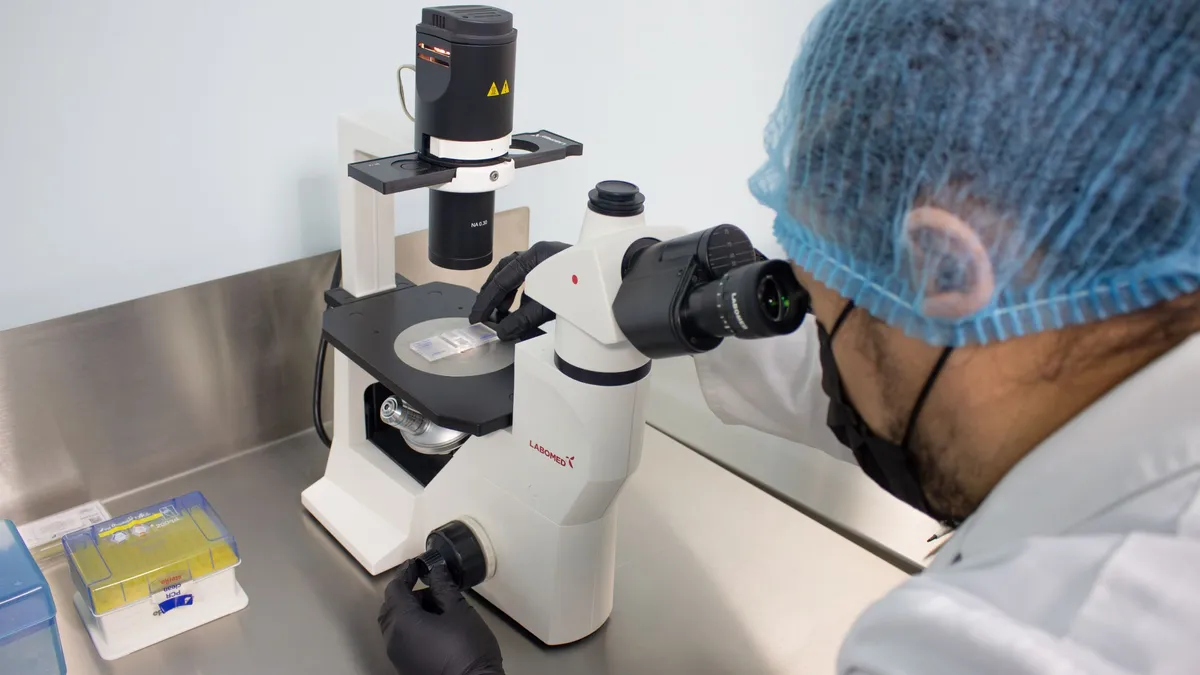
What are stem cells?
Stem cells are unspecialized cells with two defining features: they can make copies of themselves, and they can give rise to more specialized cell types, such as blood, bone or cartilage cells. Most cells in the body are already specialized and can't do either.
Stem cells are present throughout life. In adults they are found in small numbers in tissues such as bone marrow and fat, where they take part in the normal turnover of cells. How many cell types a stem cell can become depends on its type.
What types of stem cells are there?
Scientists usually group stem cells into a few broad types, based on where they come from and how many cell types they can become.
- Embryonic stem cells: taken from early-stage embryos in a laboratory. They can become almost any cell type, and their use raises ethical questions and is tightly regulated.
- Adult (somatic) stem cells: found in mature tissues such as bone marrow, fat and blood. They usually give rise to a narrower range of cell types related to their tissue.
- Induced pluripotent stem cells (iPSCs): adult cells reprogrammed in a laboratory to behave like embryonic stem cells. They are used mainly in research.
- Perinatal stem cells: found in the umbilical cord, cord blood and placenta. They are collected after birth, and cord blood has long been banked for transplant use.
Blood-forming (hematopoietic) stem cells are the most familiar adult stem cells. Bone marrow and cord blood transplants that use them are an established part of care for certain blood cancers and blood disorders, carried out in specialized transplant centers.
What are mesenchymal stem cells (MSCs)?
Mesenchymal stem cells, also called mesenchymal stromal cells or MSCs, are found in bone marrow, fat tissue and the umbilical cord. In the laboratory, they can develop into bone, cartilage and fat cells.
Researchers study MSCs mostly for their signaling and immune-modulating properties. MSCs release proteins and tiny vesicles called exosomes that act on nearby cells, and whether this matters for people with specific conditions is the subject of ongoing clinical research.
The International Society for Cellular Therapy (ISCT) has published criteria that laboratories use to identify MSCs, such as how the cells grow and which markers they carry on their surface.
How are stem cells used and regulated today?
Outside of blood-forming stem cell transplants and a small number of approved products, most uses of stem cells are still being studied. Clinical trials are looking at MSCs for joint, autoimmune, neurological and other conditions, and the evidence so far is limited and mixed.
In the United States, the FDA regulates most stem cell products as biologics. It has approved only a few, mainly cord blood products for disorders of the blood-forming system, and it has published consumer warnings about unapproved stem cell treatments. Stem cell therapy is not approved by the U.S. FDA for most conditions.
Researchers are still working on basic questions such as these:
- How MSCs signal to other cells and to the immune system.
- Which cell source, dose and route (an IV, an injection into a joint or another route) suits a given condition.
- How long the cells remain in the body after they are given.
- Short- and long-term safety, including rare risks.
Until these questions are answered, results in any one person can't be predicted.
Does stem cell therapy have risks?
Yes. Possible risks include infection, pain or swelling where the cells are given, fever, allergic or immune reactions and risks that are not yet fully known. Some routes, such as injections near the spinal cord, carry risks of their own.
That is why a careful evaluation, lab work and an honest conversation about the alternatives come before any decision. Ask any clinic how its cells are sourced, prepared and tested, and what the evidence does and doesn't show for your condition.
How does Holistic Care Clinic use stem cells?
Holistic Care Clinic in Tijuana uses mesenchymal stem cells derived from donated umbilical cords and prepared in the clinic's own laboratory. Each plan starts with a medical evaluation, and a physician decides after reviewing your records and lab results whether you are a candidate.
If you are, the physician explains the route, the timing, the risks and the alternatives before you decide. Results vary, and no result can be promised.
Medical disclaimer. Not intended to diagnose, treat, cure, or prevent any disease. Individual results vary. Treatment plans are determined after a medical evaluation, and not every patient is a candidate for every therapy. This page is general information, not medical advice. Last updated .
How Do Stem Cells Work?: common questions.
Have another question? Our patient team can help by phone.
Request InformationNo. Holistic Care Clinic uses mesenchymal stem cells derived from umbilical cords donated after birth, with the parents' consent. Embryonic stem cells are used mainly in laboratory research.
Only a few stem cell products, mainly cord blood products for certain blood disorders, are approved by the U.S. FDA. Stem cell therapy is not approved for most conditions, and a physician decides after an evaluation whether you are a candidate.
Stem cells are living cells. Exosomes are tiny vesicles that cells release to communicate with other cells, and they contain no living cells. Exosome products are not approved by the U.S. FDA to treat any disease.
There is no single price. The cost depends on the personalized plan your physician recommends, and our patient team goes over it with you during your consultation.
Take the first step towards better health.
Talk with our patient team about your goals, your records and planning your visit to Tijuana.
Physician-led careDr. Suenaga, Dr. Porcella and team