
Ozone major autohemotherapy, and what to ask first.
Major autohemotherapy (MAH) is an ozone therapy in which a portion of your blood is drawn, mixed with an oxygen and ozone gas mixture outside the body and returned through an IV. This article explains how it works, the U.S. FDA's position on ozone and the risks. At Holistic Care Clinic, a physician decides after an evaluation and bloodwork whether any ozone therapy is appropriate.
What is ozone?
Ozone (O3) is a molecule made of three oxygen atoms, while the oxygen we breathe (O2) has two. Ozone is unstable and reactive: it readily gives up its extra oxygen atom and reacts with other substances, a process called oxidation.
High in the atmosphere, ozone forms a protective layer, and at ground level it is an air pollutant. Breathing ozone irritates and can damage the lungs, which is why ozone used in medical settings is never meant to be inhaled.
For medical use, ozone is produced on site by a generator from medical-grade oxygen. The gas used is mostly oxygen with a small, measured amount of ozone.
What is major autohemotherapy?
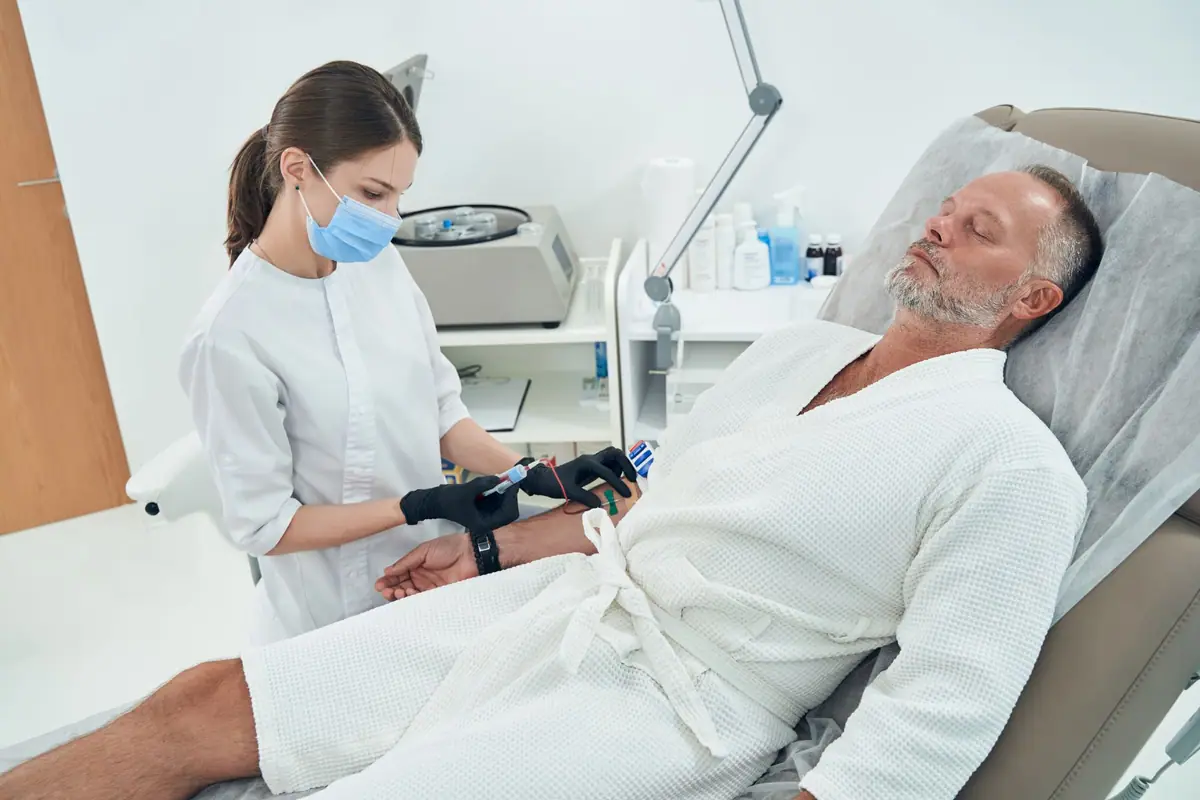
In major autohemotherapy, a measured amount of your own blood is drawn through an IV into a sterile container with an anticoagulant, a substance that keeps blood from clotting. The blood is gently mixed with the oxygen and ozone mixture outside the body and then flows back into your vein.
Autohemotherapy means a therapy that uses your own blood. Minor autohemotherapy, a related method, uses a much smaller amount of blood that is mixed with ozone and injected into a muscle.
Ozone has been used this way in some European countries for decades, and its use in integrative care is debated. Research is limited and ongoing, and results vary.
How does MAH compare with the ozone methods at the clinic?
The clinic's ozone services are described on its EBOO and ozone therapy page. They include methods that draw blood, like MAH, and methods that don't. The main differences are:
- Single-pass MAH: one cycle of drawing blood, mixing it with ozone and returning it.
- Multi-pass ozone IV: the same steps repeated in several cycles during one session.
- EBOO: blood circulates continuously through a filter and an ozone unit outside the body and returns through a second IV line.
- Methods that don't involve drawing blood, such as ozone injections, insufflation or topical application.
The physician decides which method, if any, fits your evaluation.
What happens during an ozone IV session?
An ozone IV is given by the medical team after your evaluation and bloodwork. You rest in a recliner while the team draws, mixes and returns the blood and monitors you throughout.
- An evaluation of your history, medications and goals.
- Bloodwork, which helps the physician decide whether ozone therapy is appropriate and whether anything rules it out, such as G6PD deficiency.
- If it is appropriate, a plan that explains the method, the number of sessions and how you will be monitored.
- Placement of the IV line, then one or more cycles of drawing, mixing and returning the blood.
- A check of the IV site afterward and instructions for the rest of the day.
The physician tells you how long your session will take and what to do before and after it.
What is the FDA's position, and what are the risks?
Ozone therapy is not approved by the U.S. FDA. The FDA's position is that ozone is a toxic gas with no known useful medical application in specific, adjunctive or preventive therapy.
Like any procedure that draws blood and returns it through an IV, ozone IVs have risks. These can include bruising, pain or infection at the IV site, lightheadedness, low blood pressure and vein irritation and, rarely, serious complications such as blood clots, a gas embolism (a gas bubble in a blood vessel) or infection from equipment that isn't sterile.
Ozone therapy isn't appropriate for some people, including those with G6PD deficiency, an overactive thyroid, a bleeding or clotting disorder or certain heart and blood vessel conditions, and people who are pregnant. Tell the team about every medication and supplement you take, including blood thinners.
How do you find out whether ozone therapy is appropriate for you?
Start with a medical evaluation and bloodwork. A physician reviews your history and results, explains the risks and alternatives and decides whether any ozone method is appropriate. Ozone therapy does not replace care from your own doctors, so keep them informed.
- EBOO & ozone therapyThe clinic's ozone methods, including EBOO. Not approved by the U.S. FDA.
- Medical evaluationA review of your history, current care and goals with the medical team.
- Laboratory testingTests the physician considers appropriate for your evaluation.
- IV therapyIndividual IVs given by the nursing team.
Medical disclaimer. Not intended to diagnose, treat, cure, or prevent any disease. Individual results vary. Treatment plans are determined after a medical evaluation, and not every patient is a candidate for every therapy. This page is general information, not medical advice. Last updated .
Ozone Major Autohemotherapy: common questions.
Have another question? Our patient team can help by phone.
Request InformationNo. Ozone therapy, including major autohemotherapy, is not approved by the U.S. FDA. Your physician can explain how ozone is used at the clinic, its risks and the alternatives.
Ozone reacts with many substances in the laboratory, but that doesn't show what it does inside the body. Ozone therapy is not approved by the U.S. FDA to treat any infection, including viral infections, and it does not replace care from your own doctors.
In MAH, blood is drawn into a container, mixed with ozone and returned through the same IV. In EBOO, blood circulates continuously through a filter and an ozone unit outside the body and returns through a second IV line. The physician explains which method, if any, fits your plan.
You may feel a pinch when the IV is placed. Tell the team right away if you feel pain, lightheadedness or any discomfort during the session.
There is no single price. The cost depends on the personalized plan your physician recommends, and our patient team goes over it with you during your consultation.
Take the first step towards better health.
Talk with our patient team about your goals, your records and planning your visit to Tijuana.



Physician-led careDr. Suenaga, Dr. Porcella and team