
Knee pain and stem cell injections: what to know first.
Knee pain has many causes, from sports injuries to osteoarthritis. This article explains the common causes, the usual first steps in care and where stem cell or PRP injections fit in the conversation. A physician decides after an evaluation whether any injection is appropriate for you.
What causes knee pain?
Knee pain usually comes from the joint itself, the cartilage that cushions it or the ligaments, tendons and muscles around it. The cause shapes which care makes sense, so a diagnosis comes first.
- Osteoarthritis: gradual wear of the cartilage, more common with age and after past injuries.
- Ligament injuries, such as a torn ACL, often from sports with sudden stops or twists.
- Meniscus tears: damage to the C-shaped cartilage pads between the thigh bone and the shin bone.
- Tendinitis, such as patellar tendinitis, from repeated strain.
- Bursitis: irritation of the small fluid-filled sacs around the joint.
- Gout and inflammatory arthritis, such as rheumatoid arthritis.
Where the pain sits, what makes it worse and whether the knee swells, locks or gives way all help a clinician narrow down the cause.
What are the usual first steps for knee pain?
Most knee pain is first evaluated by a primary care physician or an orthopedic specialist, often with an exam and imaging such as X-rays or an MRI. Common first options include activity changes, physical therapy, weight management and pain medication chosen by your doctor.
Some people go on to discuss corticosteroid or hyaluronic acid injections, bracing or, when joint damage is advanced, surgery such as a knee replacement. Your own physician or orthopedic specialist is the right person to guide those decisions.
See a doctor urgently if you can't put weight on the leg, the knee looks deformed, it locks or gives way after an injury, or it is hot, red and swollen with a fever. These signs need prompt medical care before any elective treatment is considered.
Where do stem cell and PRP injections fit?
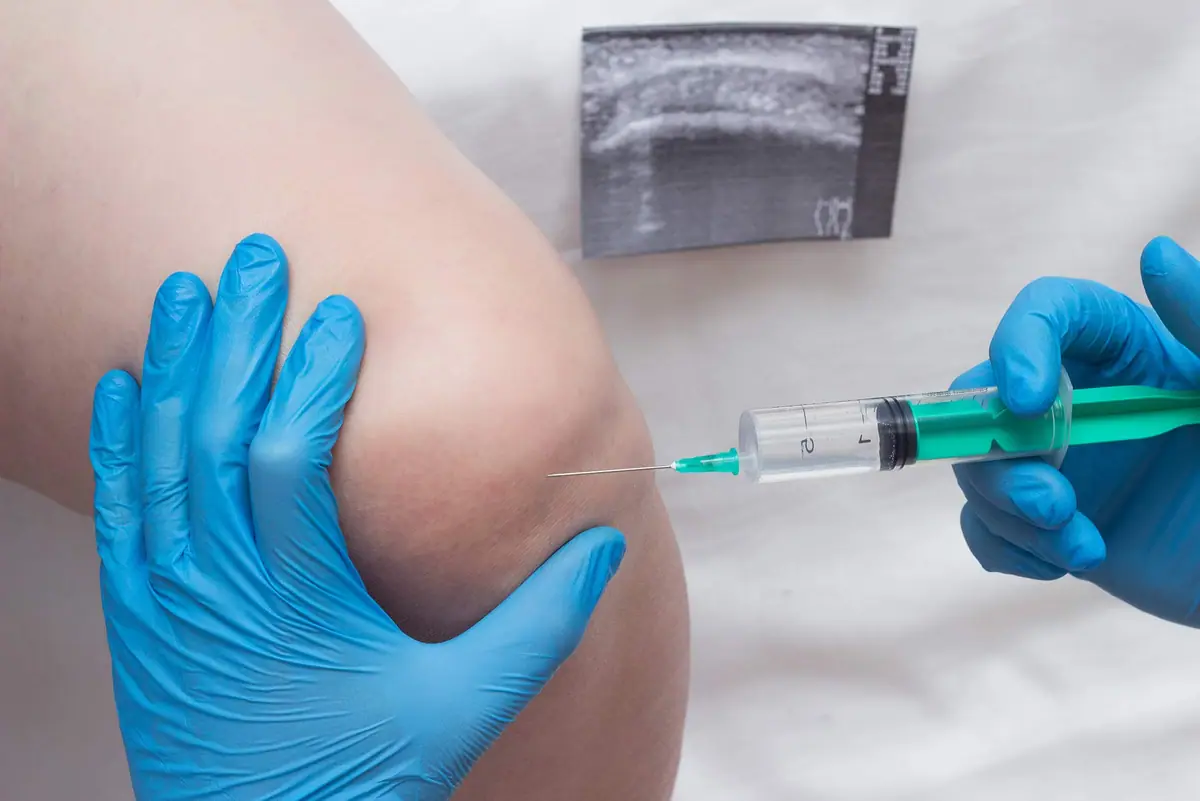
Stem cell and platelet-rich plasma (PRP) injections are options some patients ask about, often after trying other care. A joint injection places a prepared product directly into or around the knee.
Researchers study mesenchymal stem cells (MSCs) for their signaling and immune-modulating properties, and clinical studies in knee osteoarthritis are ongoing. The evidence is still limited and mixed. Stem cell therapy and PRP are not approved by the U.S. FDA for knee pain or osteoarthritis.
The two products are different. PRP is prepared from a small sample of your own blood, spun in a centrifuge to concentrate the platelets. At Holistic Care Clinic, stem cell injections use mesenchymal stem cells prepared in the clinic's own laboratory. Which product, if either, makes sense depends on your diagnosis, your health and the findings on your imaging.
What does an evaluation for a knee injection involve?
At Holistic Care Clinic, the medical team looks at your knee and your overall health before recommending anything. The evaluation may end with no recommendation for an injection.
- Your history, previous treatments and what has or hasn't helped.
- Recent imaging, such as X-rays or an MRI.
- A physical examination of the knee.
- Laboratory testing, if the physician considers it necessary.
- A discussion of the risks, the alternatives and realistic expectations.
Bring notes from your physician or orthopedic specialist and any imaging reports. Your own doctors stay in charge of your knee care, so please keep them informed about anything discussed here.
What are the risks of a knee injection?
Any joint injection can cause pain, swelling or stiffness for a few days, and less often infection, bleeding or an allergic reaction. Stem cell products carry additional risks, some of which are not yet fully known.
Tell the medical team about every medication you take, especially blood thinners, and about any recent infection. Seek medical care promptly if your knee becomes hot, red and very swollen or you develop a fever after an injection.
How do you find out if an injection is appropriate?
Send your imaging and records and request a consultation. A physician decides after an evaluation whether you are a candidate for a stem cell or PRP injection, or whether another option is a better fit. Results vary from person to person.
Medical disclaimer. Not intended to diagnose, treat, cure, or prevent any disease. Individual results vary. Treatment plans are determined after a medical evaluation, and not every patient is a candidate for every therapy. This page is general information, not medical advice. Last updated .
Knee Pain and Stem Cell Injections: common questions.
Have another question? Our patient team can help by phone.
Request InformationThat is one of the questions researchers are studying, and the evidence so far is limited and mixed. We can't say that an injection will change the cartilage in your knee, and a physician talks with you about realistic expectations after your evaluation.
We can't say that any therapy will replace surgery. If your orthopedic specialist has recommended surgery, please discuss any alternative with them. Our physician will tell you honestly whether the clinic's services are a fit.
PRP is prepared from a small sample of your own blood, while stem cell injections use cells prepared in the clinic's laboratory. The physician explains which, if either, is appropriate for your knee and why.
There is no single price. The cost depends on the personalized plan your physician recommends, and our patient team goes over it with you during your consultation.
Take the first step towards better health.
Talk with our patient team about your goals, your records and planning your visit to Tijuana.



Physician-led careDr. Suenaga, Dr. Porcella and team